
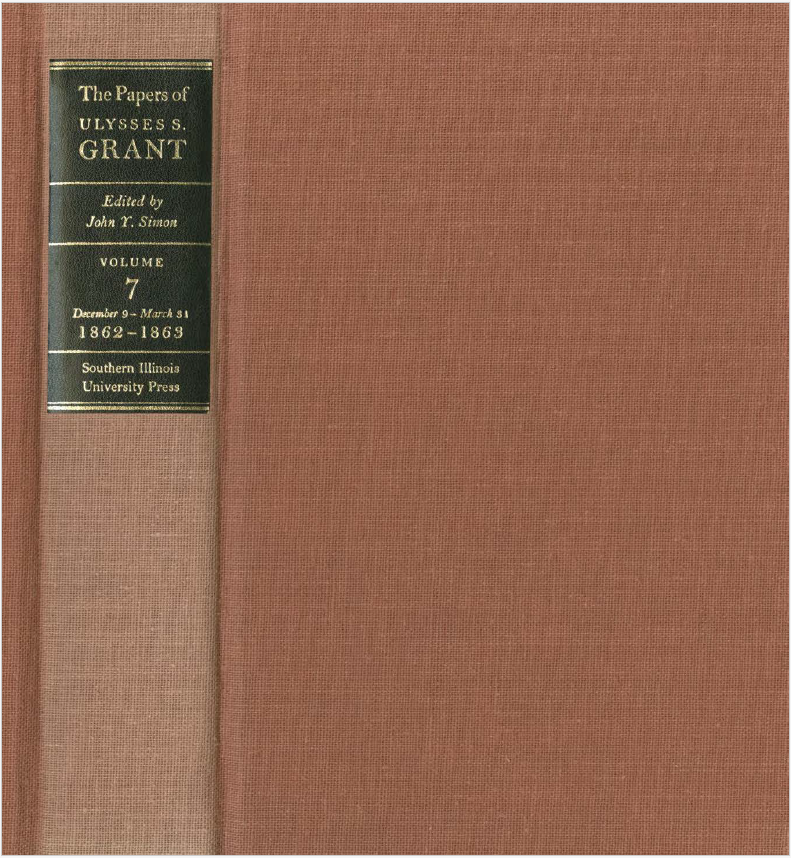
Volume 07 of The Papers of Ulysses S. Grant, December 9, 1862–March 31, 1863
 This prestigious collection’s Volume 07 offers a thorough examination of a crucial time frame in the American Civil War, from December 9, 1862, to March 31, 1863. The leadership of Ulysses S. Grant throughout a period of substantial military operations and strategic decision-making is explored in this book.
**Contents:**
1. Communication with Military Superiors Grant’s correspondence with military leaders, such as General Henry W. Halleck and President Abraham Lincoln, provides details on his encounters with other Union commanders, his strategic planning, and his attempts to collaborate with them.
2. Planning the Vicksburg Campaign: Grant’s strategic vision to seize the crucial Confederate stronghold of Vicksburg, Mississippi, is revealed in documents pertaining to his preparation for the Vicksburg Campaign. These strategies would ultimately change the course of the battle.
3. Logistical Difficulties: The book contains records that discuss the logistical difficulties that Union soldiers encountered at this time. It illustrates Grant’s efforts to make sure that his men had the right supplies and gear when they started important missions.
4. Official Orders and Reports: Grant’s military orders, field reports, and correspondence offer a thorough account of his leadership in controlling the overall plan, directing troop movements, and collaborating with other Union commanders.
5. Diplomatic Efforts: Letters and dispatches relating to diplomatic endeavors and discussions with Confederate soldiers shed light on Grant’s participation in trying to broker peace agreements and prisoner of war trades during this time.
6. **Battle of Champion Hill**: Records from this critical conflict, fought on May 16, 1863, during the Vicksburg Campaign, demonstrate Grant’s leadership and tactical prowess.
**Significance:**
The Papers of Ulysses S. Grant, Volume 07, documents an important period in Grant’s Civil War career that was characterized by his tactical planning for the Vicksburg Campaign, logistical difficulties, and important military activities. Because it paves the way for Grant’s later victories, such as the conquest of Vicksburg, which would have a huge influence on the direction of the Civil War, this time period is extremely important. The materials in this book help readers gain a better picture of Grant’s leadership, judgment, and crucial contribution to the Union’s efforts in the Western Theater.